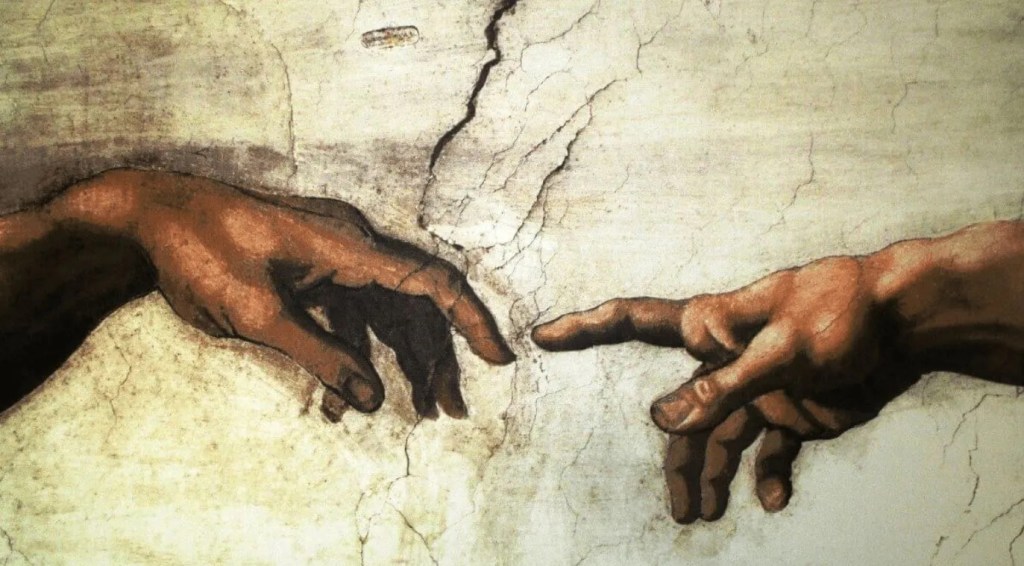
Sovereignty means that God possesses absolute power and authority to do whatever He wills. Providence is the exercise of that sovereignty with perfect wisdom, love, and purpose. God does not simply control everything; He orders everything toward His perfect will. Providence is His sovereignty in action. Always purposeful, redemptive, and unfailing. Job declared, “I know that You can do all things, and that no purpose of Yours can be thwarted” (Job 42:2). Paul echoes this in Romans 9, showing how God’s mercy and compassion operate according to His purposes, not human merit: “I will have mercy on whom I have mercy… So then, it does not depend on human will or effort but on God who shows mercy” (Romans 9:15–16).
The distinction between figures like Paul, Peter, and Judas does not rest in their personal worthiness but in how each responded to God’s gracious invitation. God sovereignly offers mercy, yet He works through human hearts, drawing and shaping them according to His redemptive purpose. Judas’s heart remained hardened, not because God delighted in it, but because of the fullness of human depravity. God did not force his hardness; rather, Judas’s response to divine mercy exposed what was already within him. Yet, in the mystery of providence, that hardness was permitted and woven into the necessity of redemptive history so that even human rebellion would serve the purposes of divine love. Proximity to Jesus did not equal true relationship, and the contrast between Peter and Judas underscores that even repentance itself is a gift of grace (2 Timothy 2:25). In Gethsemane, Jesus exemplifies the profound tension of divine obedience and human experience: “Father, if You are willing, remove this cup from Me; nevertheless, not My will but Yours be done” (Luke 22:42). The cup He faced was the full weight of God’s wrath against sin. Yet His divine will remained perfectly aligned with the Father’s purpose. If Jesus has the full wrath of God poured on Him, then what remains in it? Nothing. That means there is no wrath left for those who are in Christ Jesus. Even in Judas’s betrayal, God’s providence unfolds with unfathomable love. Jesus washed Judas’s feet, even with foreknowledge. I fully believe Grace was offered, but it was never embraced. For God so loved the world that He gave His only Son that WHOEVER believes in Him will not perish but have eternal life. Yet Judas did not believe. The Greek term for Judas’s remorse, metamelētheis, denotes regret and self-condemnation, not the transformative turning toward God (metanoia). Judas’s unbelief, not his act of betrayal, sealed his fate.
God did not force Judas to be evil. Rather, He allowed Judas’s heart to persist in its chosen path until it reached its end. As with Pharaoh, God “hardened” what was already hard, not by planting evil, but by permitting it to mature. Jesus said, “The Son of Man goes as it is written of Him, but woe to that man by whom the Son of Man is betrayed!” (Matthew 26:24). Judas’s act was both foreknown (“as it is written”) and freely chosen (“woe to that man”). God did not program Judas’s betrayal; He used Judas’s rebellion to accomplish redemption. Joseph expressed this too, “You meant evil against me, but God meant it for good” (Genesis 50:20). The same God who can break hearts of stone sometimes allows hearts to remain hard, not because He delights in it but because His purposes are larger than our understanding.
His ways remain beautifully beyond my comprehension, but I believe if every disciple had repented, we might underestimate the depth of human depravity. Judas stands as a solemn warning that proximity to Jesus is not the same as relationship with Him. Peter failed too, but he wept and returned. Judas failed and despaired. The difference between them reveals that even repentance itself is a gift of grace (2 Timothy 2:25). Evil was not merely resisted by God; it was absorbed and transformed into the very means of salvation. At the cross, evil exhausted itself, striking God’s Son and, in doing so, destroying its own claim of victory. There was no other way. God could have destroyed evil instantly, but that would have erased justice, love, and freedom. Instead, He conquered evil from within by letting it do its worst to Him and then rising victorious. Through Judas, God revealed that even human treachery cannot thwart His redemptive plan. Through Christ, He revealed that divine mercy can redeem the worst of evil. Judas’s story is both tragedy and testimony. Oh, wondrous wisdom that the traitor’s kiss should help unveil eternal love.
in Exodus. Before Moses ever returns to Egypt, God tells him, “I will harden Pharaoh’s heart” (Exodus 4:21). Yet in the early plagues, Scripture records that Pharaoh hardened his own heart. Only later, beginning with the sixth plague, does it say that God hardened Pharaoh’s heart (Exodus 9:12). The sequence matters: man first resists, then God confirms that resistance as judgment. Repeated rejection of truth eventually leads to blindness to truth. The same principle unfolds in Isaiah 6 and later in Jesus’ parables. The Lord does not delight in deafness or blindness, but after long rebellion, He allows those who reject light to be darkened by their own choice and uses it for His will.
When the disciples asked Jesus why He spoke in parables, He answered with language that directly echoed Isaiah: “To you it has been given to know the secrets of the kingdom of God, but to others they are in parables, so that ‘seeing they may not see, and hearing they may not understand.’” (Luke 8:10) In Matthew 13:10–17, He expands further: “But blessed are your eyes, for they see, and your ears, for they hear. For truly, I say to you, many prophets and righteous people longed to see what you see and did not see it, and to hear what you hear, and did not hear it.” Here Jesus draws the dividing line between those who are open to revelation and those who are hardened against it. The disciples’ ears are “blessed” not because of their merit, but because of divine grace. The same Word that blinds the proud illuminates the humble. The writer of Hebrews 11:39–40 says of the prophets and faithful ancestors, “And all these, though commended through their faith, did not receive what was promised, since God had provided something better for us, that apart from us they should not be made perfect.” They saw shadows; we see substance. They longed for what the disciples beheld face-to-face. And Jesus Himself declared in Matthew 11:11, “Truly, I say to you, among those born of women there has arisen no one greater than John the Baptist. Yet the one who is least in the kingdom of heaven is greater than he.” The difference is not moral stature but revelation privilege, for John stood at the threshold of the kingdom, but those who would be witness to and live after Pentecost would receive the indwelling Holy Spirit, the firstfruits of glory itself. Paul later uses this phrase, “the firstfruits of the Spirit” (Romans 8:23), to describe the believer’s present experience of divine life. Just as Israel brought the first sheaf of harvest as a pledge of what was to come, so too the Holy Spirit is the foretaste of heaven. The first hope was Christ Himself, the incarnate promise fulfilled. Our second hope is His return, when faith will be sight and the veil of partial understanding will be lifted. Between those two hopes, the Spirit works within the believer, softening the heart that once was callous, opening the eyes that once were blind.
Jesus says, “To you it has been given to know the secrets of the kingdom.” Their willingness to seek understanding set them apart. Afterward, He explains each parable privately to them for example, in Luke 8:11–15, the Parable of the Sower is explained line by line. After Jesus’ resurrection, He promises that the Holy Spirit will guide believers into all truth. Jesus says in John 14:26- “But the Counselor, the Holy Spirit, whom the Father will send in my name, will teach you all things and remind you of everything I have told you.” So, while the disciples needed Jesus to explain the parables directly, we now have the same divine interpreter, the Holy Spirit, who unveils their meaning. As I sit and read the Word of God, with the Holy Spirit guiding me, and I am able to understand these parables with clarity, it touches something deep in my soul. There’s a rush of power that flows through me, my whole body feels alive, and my hands tingle. The Holy Spirit is so awesome, working in ways that are personal, mysterious, and deeply intimate. He connects with us in all kinds of ways, illuminating truths, stirring our hearts, and making the Word not just something we read, but something we experience with every fiber of our being. I love Bible studies. There’s something so alive about gathering around God’s Word, whether alone in quiet reflection or with others, breaking down the Scriptures line by line. It’s like stepping into a conversation with God Himself, seeing the layers of meaning, the parables unfolding, and the promises coming alive. It’s one of the deepest joys I know, a time when my mind, heart, and spirit connect with His truth in a way that nothing else can replicate.
I’ve walked miles fishing in small streams, sat for hours on ice, and caught nothing. It’s frustrating when it’s just a hobby, but imagine if it were your livelihood, if success meant survival. This is the scene Luke 5 paints: Simon Peter and his companions, weary and discouraged, had fished all night with nothing to show. And yet, when Jesus tells them to try again, they obey, and their nets overflow. God often chooses to work in our weakness, exhaustion, and failure, not when we feel strong or capable. It’s in those moments that His power shines, not ours. God called Gideon to deliver Israel from the Midianites, but Gideon was hesitant and self-conscious: “But Lord, how can I save Israel? My clan is the weakest, and I am the least in my family” (Judges 6:15). God intentionally chose the “weakest” man to show that the victory would come from His power, not Gideon’s. God then drastically reduced Gideon’s army from 32,000 to 300 men (Judges 7:2–7), removing any human boasting. The victory over the Midianites was utterly impossible by human standards, yet Gideon’s obedience allowed God’s power to shine. When Peter saw the catch, he reacted in awe and fear: “Depart from me, for I am a sinful man, O Lord” (Luke 5:8). Why? Because confronting God’s holiness always exposes our sin. Isaiah cried, “Woe is me! For I am lost; for I am a man of unclean lips” (Isaiah 6:5). Ezekiel fell prostrate before God’s glory. A deeper awareness of God’s purity doesn’t shame us for its own sake, it convicts us so we might be transformed. Like a surgeon shining light on a wound, God exposes our brokenness not to condemn, but to heal. And just as Isaiah’s guilt was taken away before he was sent, Peter’s trembling was met with reassurance and calling: “Do not be afraid; from now on you will be catching men” (Luke 5:10). Peter’s vocation changed overnight. The skills he had patience, perseverance, and teamwork were redirected from fishing to the gospel. God does the same with us. Our experiences, our weaknesses, and our failures become tools in His kingdom when surrendered. They left everything, not for miracles, but for Jesus Himself. The catch of fish was astonishing, yet it was a personal encounter with the living God that compelled their obedience fully. Jesus calls first to relationship, then to mission. Without knowing Him, even the best of efforts become chaotic. Spirit-led work bears fruit; human effort produces nothing but exhaustion. This is also why we must be cautious with slogans like “this too shall pass.” We often think of it as comfort for suffering, and rightly so, but it carries a sober reminder in prosperity as well. Everything passes, even the things that make us feel good. That’s why our hope can’t rest on what shifts with the wind, but on Christ, who never changes. Emotions are transient. They cannot anchor our spiritual lives. Happiness, grief, adrenaline, and outrage or anger are all fleeting. If we base our obedience, our zeal, or our witness on these shifting currents, chaos and doom are the outcome. In Isaiah 6, when the prophet stands before the Lord in His heavenly temple, he shows a repentant heart. “Woe is me,” Isaiah cries, “for I am a man of unclean lips, and I dwell among a people of unclean lips.” (Isaiah 6:5). It is only after a seraphim takes a burning coal from the altar and touches his lips that Isaiah is forgiven and made ready for service. God heals him, purifies him, and then immediately sends him. But the mission to which Isaiah is sent seems paradoxical: “Go, and tell this people: ‘Keep on hearing, but do not understand; keep on seeing, but do not perceive.’ Make the heart of this people dull, and their ears heavy, and blind their eyes; lest they see with their eyes, and hear with their ears, and understand with their hearts, and turn and be healed.” (Isaiah 6:9–10) God does not command Isaiah to soften hearts but to speak in such a way that the truth will harden them.
When Jesus performs the miraculous catch of fish. Peter, like Isaiah, encounters divine holiness and breaks down in recognition of his sinfulness: “Depart from me, for I am a sinful man, O Lord.” (Luke 5:8). Yet just as the burning coal touched Isaiah’s lips, Christ’s words touch Peter’s heart: “Do not be afraid; from now on you will be catching men.” (Luke 5:10). Both men, confronted by holiness, are first repentant, then cleansed by the Lord, and then sent.
Morality flows from our image of being in Christ, but morals alone are not Holy. Holy is Holy, Christ is Holy. Isaiah 55:8-9 says, “For my thoughts are not your thoughts, and your ways are not my ways. This is the Lord’s declaration. “For as heaven is higher than earth, so my ways are higher than your ways, and my thoughts than your thoughts.” But Psalm 103:11-12 says, “For as high as the heavens are above the earth, so great is his faithful love toward those who fear him. As far as the east is from the west, so far has he removed our transgressions from us.” As high as the heavens are above the earth, so are His ways, and as far as the east is from the west, so is His mercy toward us. God’s holiness is an overwhelming, ineffable mystery that terrifies and draws us in, His ways and judgment higher than the heavens, yet through Christ His boundless love and grace sustain us in darkness we could never endure on our own.
God is not found at the end of a thought but at the surrender of the will. Intelligence will never storm the gates of heaven. The mind may soar to dizzying heights of philosophy, theology, and reason, yet it cannot pierce the veil between man and God. We may unravel the mysteries of atoms and angels alike, but our hearts remain a labyrinth of pride and rebellion. Even when the disciples saw the resurrected Christ the Conqueror of death, standing before them, some still doubted. What stronger proof could we need that reason alone cannot save us? Our eyes can behold glory itself, and our hearts can still tremble in unbelief (Matthew 28:17). A thousand sermons understood are not worth one moment of true repentance. A universe of facts cannot equal the trembling whisper, “Father, forgive me.” As Dostoevsky wrote, “The whole world of knowledge is not worth that child’s prayer to dear, kind God.” And if our works are but filthy rags before a holy God (Isaiah 64:6), then how much more worthless is our wisdom, that fragile, pride-soaked dust we call understanding? For the Lord has declared, “I will destroy the wisdom of the wise, and I will set aside the intelligence of the intelligent” (1 Corinthians 1:19). “The fear of the Lord is the beginning of wisdom, and the knowledge of the Holy One is understanding” (Proverbs 9:10). It is not intellect but awe; not human logic but divine light. Human wisdom built Babel and reached for heaven God’s wisdom built Calvary and brought heaven down.
For the Christian life this is the journey of sanctification, the pilgrim’s progress, a process, not an instant perfection. Even after coming to Christ, we are still being refined, still being shaped into His likeness. Paul wrote, “Not that I have already obtained this or am already perfect, but I press on to make it my own, because Christ Jesus has made me His own” (Philippians 3:12). We are still works in progress. We still sin and fall short of the glory of God. To deny this reality is to deceive ourselves. Speaking about grace and repentance means nothing if we are unwilling to confront our own sinful tendencies. Pretending to be righteous only builds an illusion that blinds both us and those around us. Genuine repentance begins with honest self-examination, acknowledging that something within our thoughts, words, or actions is misaligned with God’s will. To confess sin is not to wallow in guilt but to come into agreement with God about what is wrong and to seek His transforming grace. “If we confess our sins, He is faithful and just to forgive us our sins and to cleanse us from all unrighteousness” (1 John 1:9). True humility admits that there is still work to be done in our hearts. The human heart, apart from God, is not merely injured it is spiritually dead. “The heart is deceitful above all things, and desperately sick; who can understand it?” (Jeremiah 17:9). And again, “You were dead in your trespasses and sins” (Ephesians 2:1). That means our problem is not just moral weakness, it is spiritual lifelessness. A dead battery cannot jump another dead battery. In the same way, a heart separated from God cannot generate its own power to change. We cannot heal ourselves, because the very thing that needs healing is the instrument by which healing would take place. We cannot make our own hearts pure, because our hearts are the source of impurity (Mark 7:21–23). When we confess sin, we are not fixing ourselves, we are surrendering to the One who can. We acknowledge that our heart is broken, that our power is gone, and that apart from Him, we can do nothing (John 15:5). It is humility, not self-repair, that opens the door for His grace to work. Grace is the spark that restarts the dead battery. The Spirit of God is the life that revives what was lifeless. That is why David, after his sin, did not say, “I will make my heart clean,” but “Create in me a clean heart, O God, and renew a right spirit within me” (Psalm 51:10). He knew only God could do it. So when your heart feels broken, empty, or powerless, remember that is not your disqualification, it is your invitation. The end of your strength is where God’s strength begins.
This same God who runs the galaxies also counts the hairs on your head (Luke 12:7). He notices the fall of a sparrow (Matthew 10:29) and keeps every tear in His bottle (Psalm 56:8). He is transcendent beyond all that exists yet intimately near, woven into every detail of your life. The stars remind us that He is both immeasurable in power and immeasurably personal in love. The ability to love and forgive others, also, isn’t something that comes naturally to us. We can’t do it on our own strength. It requires a radical change in the way we view ourselves and the world. The reason we can love others so selflessly, why we can choose to forgive even when it feels impossible, is because of the forgiveness God has extended to us. The Bible makes it clear that God forgives us not based on anything we have done or could ever do, but purely out of His mercy and grace (Ephesians 4:32). This forgiveness is the foundation of our salvation and the basis for all true Christian living. When we truly grasp the depth of God’s forgiveness, it changes us. It moves us from a place of judgment and bitterness toward others to a place of grace and compassion. Forgiving others, however, isn’t always easy. It requires us to acknowledge the wrongs done to us, to confront our pain and our anger, and to let go of the need for retribution. It is an act of trust, recognizing that we do not need to control every situation or demand our way. Ultimately, forgiveness is a statement that says, “I trust God with justice, and I will leave it in His hands.” It is not foolishness to forgive; rather, it is a deep strength, an act of obedience to the God who forgave us when we had no merit of our own. In forgiving, we release the hold that bitterness has over our hearts and make space for peace, both within ourselves and in our relationships with others.
Rudolf Otto, in his classic work The Idea of the Holy (1917), described an experience he called the numinous, the sense of encountering something wholly other, a presence that is beyond comprehension or description. Otto called it a mystery that both terrifies and draws us in. It’s an overwhelming awareness of the divine, a realization that we stand before the Creator who transcends all categories of human reason. When we speak of God’s holiness, this is what we mean: not simply moral perfection, but a reality that is set apart, utterly beyond creation. Holiness is not a moral code; it is the very essence of God’s being, so pure, so unapproachable, and yet so compelling that it both breaks us and remakes us. It is an ineffable, awe-filled experience that human language can barely touch. That’s why some things about God, especially the mystery of the Trinity, cannot be reduced to analogy. Any earthly comparison collapses under the weight of divine reality. We can say God is love because we experience love, but we have never experienced what it is to be immaterial, eternal, and self-existent. The Father, Son, and Holy Spirit are not like water, or light, or the sun, they are beyond all likeness. Only God Himself can reveal what He is like, and He has chosen to reveal that truth through Christ and the Spirit, not through human imagination. We cannot explain everything, and that is okay. I’m no prophet, no apostle. I’m just a man dust from an odd place in this world. I’ve seen darkness deep enough to drown in, pain I couldn’t pull myself out of. And yet, Christ met me there. His grace found me when nothing else could. I can’t boast of my strength, only of His mercy that keeps me standing. God willing, He’ll keep me going. Morality flows from our image of being in Christ, but morals alone are not Holy. Holy is Holy, Christ is Holy.
True discernment is not born of mere intellect or instinct, it is a gift from God. Discernment flows from a mind renewed by Scripture and a heart humbled in prayer. It is the product of communion with God, not clever reasoning. The closer we draw to Him, the more clearly we begin to see truth, for He is truth. The Spirit refines our perception, teaching us to distinguish between conviction and compulsion, between God’s call and self-will. God often allows situations that expose our motives. A decision that looks righteous under excitement may prove hollow under hardship. That is why life must be measured by faithfulness, not intensity. Many people burn brightly for a moment, but discernment is proven in steadfast endurance, continuing to obey even when emotion fades. The tests of discernment come through Scripture, Inner conviction and confirmation from the body of Christ. Every “leading” must align with God’s Word. True conviction must persist even when it is unglamorous, even when no one is watching. Others grounded in faith can affirm or gently correct our understanding. God works through His people.
Ephesians 4:26 commands, “Be angry and do not sin.” The emotion itself is not sin, it can reflect a moral awareness of evil or injustice. Yet James 1:20 warns, “The anger of man does not produce the righteousness of God.” Human anger, when untethered from humility, often misfires. It seeks revenge rather than redemption. Jesus demonstrated perfect discernment in His anger. When He cleansed the temple (John 2:13–17), it was not personal offense but zeal for God’s holiness that moved Him. His wrath was pure because it was selfless and aligned with the Father’s will. Yet on the cross, when He faced unspeakable injustice, He prayed, “Father, forgive them.” His restraint revealed divine love in its fullest measure. We must ask ourselves: After my anger passes, do I feel closer to God’s heart or drained and hardened? Righteous anger leads to repentance and restoration. Destructive anger leaves a trail of damage and regret. Anger that seeks retaliation is not righteous, it is rebellion against God’s justice. Jesus warned that anger in the heart is the root of murder (Matthew 5:21–22). To wish harm or vengeance is to step into the territory of sin before a single act is done. God alone is the Judge. To retaliate is to usurp His authority. Discernment teaches us that no matter how justified our emotions feel, retaliation corrupts the heart and distances us from Christ. If we are ever prosecuted or persecuted for our faith, we should expect it rather than fight back in fury. Jesus said, “If they persecuted me, they will also persecute you” (John 15:20). The early Christians did not retaliate when beaten or mocked; they rejoiced that they were counted worthy to suffer for His name. Sometimes faithfulness is shown not by winning an argument, but by bearing witness through calm endurance. The goal is not victory in the world’s terms, but obedience in God’s eyes. Intensity burns hot and fast it often depends on emotion or pride. Faithfulness is steady and humble it depends on grace. The truly discerning person does not measure their life by bursts of passion, but by quiet, consistent obedience. To be discerning is to be anchored in truth, ruled by love, and guided by the Spirit. It is to see as God sees, to act as Christ would act, and to remain steadfast even when the world mocks or misunderstands.
𝕯𝕰𝖀𝕾 𝖁𝖀𝕷𝕿 . 𝕹𝖔 𝖌𝖚𝖎𝖑𝖙 𝖎𝖓 𝖑𝖎𝖋𝖊, 𝖓𝖔 𝖋𝖊𝖆𝖗 𝖔𝖋 𝖉𝖊𝖆𝖙𝖍, 𝖙𝖍𝖎𝖘 𝖎𝖘 𝖙𝖍𝖊 𝖕𝖔𝖜𝖊𝖗 𝖎𝖓 𝕮𝖍𝖗𝖎𝖘𝖙 𝖎𝖓 𝖒𝖊 𝖋𝖗𝖔𝖒 𝖑𝖎𝖋𝖊’𝖘 𝖋𝖎𝖗𝖘𝖙 𝖈𝖗𝖞 𝖙𝖔 𝖋𝖎𝖓𝖆𝖑 𝖇𝖗𝖊𝖆𝖙𝖍. 𝕵𝖊𝖘𝖚𝖘 𝖈𝖔𝖒𝖒𝖆𝖓𝖉𝖘 𝖒𝖞 𝖉𝖊𝖘𝖙𝖎𝖓𝖞!!!!
𝕭𝕰𝕹 𝕬𝕹𝕿𝕳𝕺𝕹𝖄 𝕾𝕴𝕸𝕺𝕹
Writing as 𝖂𝕴𝕷𝕷 𝕱𝕺𝕽𝕲𝕰
𝕻𝕴𝕷𝕲𝕽𝕴𝕄 𝕻𝕺𝕹𝕯𝕰𝕽𝕴𝕹𝕲𝕾 𝕸𝕴𝕹𝕴𝕾𝕿𝕽𝖄
 Pilgrims Ponder
4 responses to “He Chooses Mercy, We Witness Mystery”
[…] He Chooses Mercy, We Witness Mystery […]
LikeLiked by 1 person
Thank you very much for this post – I would like to encourage you to excel still more in this gift of writing the Lord has given you! I appreciate all the Scripture used and the reverence for Jesus Christ.
Grace and Peace in Christ,
a fellow traveler
LikeLiked by 1 person
Thank you friend! All glory to God!
LikeLiked by 1 person
Amen!
LikeLiked by 1 person