I have found it harder and harder to make my writing readable, not because there is nothing to say, but because there is far too much. I have attempted every manner of writing I know, and still the amount I wish to express feels impossible to accomplish. To speak only in fragments feels dishonest. I see everything under God, and everything is so deeply connected that to offer only a portion feels like an injustice. The whole is beautiful, but more than that, every single piece is absolutely beautiful. There is in me a real grieving over the lack of reverence and observation in my generation. I wish to instill reverence and to awaken observation, but I know, in truth, that I instill nothing at all. Only God ignites that flame. Only God cures the learned helplessness and the boredom of mind that has settled so comfortably over us.
Boredom of mind is often self-caused. It is rooted in self-centeredness. We are bored because we are curved inward, endlessly circling our own appetites, our own anxieties, and our own reflections. And I do not exempt myself. We are all self-centered. No discipline, no philosophy, and no clever rearranging of habits can finally cure that. Only Christ can change the heart. Some argue that change is possible without Christ. That people can become good, meaningful, or whole on their own, and to say otherwise is dismissive. But this misses something important. Christ is God because He alone stands outside the system of borrowing. Everything else depends on something else to exist. Christ does not. He has what could be called unborrowed life. He owes nothing. When Christ entered the world as a man, He brought that unborrowed life into a broken system. He did not just teach truth like a philosopher. He is the Truth because He is the source of it. He is not explaining the rules, He is the one who wrote them. God created the physical world as something to be observed, cared for, and stewarded. Life was meant to flow freely from God to man and then outward in responsibility and gratitude. But the world we live in now is shaped by fear, death, and confusion. That system was not created by God. It was created when man tried to replace Him. We try to become our own creators. We try to give ourselves meaning apart from God. In doing so, we created a kind of debt, original debt (original sin). To observe carefully is to admit that reality was given to us, not invented by us.
In ancient banking, a Jubilee was a year when all debts were erased. Slates were wiped clean. People were released from what they could never fully repay. But even then, there was one thing no one could ever declare a jubilee over: death. Christ did not borrow His life back from the system. He overcame the system entirely. And by doing that, He offered a true debt cancellation for the human soul. This is why He is the only way. He is the only source of unborrowed life. If you get your life from the system, the system owns you. If you get your life from the Resurrection, you are paid in full. The Resurrection is the only truth that does not change when the system shifts. Markets move. Cultures turn. Power rearranges itself. The so-called “animal spirits” of society rise and fall. But the Resurrection remains. It does not bend to mood, fear, or opinion. And the Resurrection is not an escape from responsibility. It is an escape from the power of the system over the soul. It frees you to act rightly without being owned by outcomes, status, or fear.
For example, if you are a student, God placed you in that position. If you are a teacher, God has placed you in that position. Your job is to be a steward. Be a student when you’re a student, and know what that means, and steward that responsibly. If you’re an educator, be an educator and understand what that means, and do that responsibly. When God does give you a responsibility, then you are accountable for stewardship over it. And if you fail, reality itself does not change. Truth does not wobble. The role does not disappear. All still belongs to God. Only you fail. You miss the mark. You sin. Your failure does not damage reality. It damages you. And when responsibility is mishandled, systems begin to rot from the inside. If you believe you are a teacher by your own will alone, you enter a debt-based story. You “own” the role, so you must protect it. You defend your status. You guard your image. And the role stops being service and becomes survival. Stewardship works differently. What God gives, you serve. If you serve it well, good flows outward. If you fail, you repent, not because reality broke, but because you did.
In Acts 5, something strange happens. When the angel frees the apostles from prison, they do not run. They do not hide. They go straight back to the Temple, the very place they were arrested to begin with. They had every reason to leave. No reward waited for them. No safety. No advantage. What they did makes no sense by the logic of the world. This is action with no incentive. And that kind of action breaks the system, because the system cannot understand it. We see this pattern again and again. But the fullest example is Christ Himself. Not just a man, but God, the Creator of the true way, walking straight into suffering and death, not to escape it, but to defeat it for us. The system depends on fear. It depends on your desire to survive at any cost. It depends on you wanting to avoid pain, loss, and death. That is how it keeps control.
When the apostles return to obedience, when they go back and speak “the words of this life,” they show that death no longer has power over them. Fear has lost its grip. The system’s main weapon is gone. If the Resurrection were just a story, just another myth made by people, it would have faded quickly. Movements like that always do. History shows that without a powerful leader, money, or military force, movements collapse within a generation or two. But that didn’t happen. Two thousand years later, it’s still here. And not just surviving, growing. That isn’t normal endurance. It goes against decay. It moves forward without borrowing power from the world’s systems. Notice what the angel says. He doesn’t say, “Start a new religion.” He doesn’t say, “Fight the system.” He says, “Go and speak… this life.” This is why trying to fix things by working harder inside the system doesn’t work. If you try to fix education by tweaking programs, chasing trends, or changing algorithms, you’re just moving chairs around on a sinking ship. You are still playing by the system’s rules. Freedom doesn’t come from fixing the system. It comes from stepping out of its way of thinking. You stop trying to control outcomes. You stop trying to manufacture meaning. You stop trying to win. And you start stewarding truth.
“Fear God and keep His commandments.” That is the whole duty of humanity. It really is that simple. The world becomes complicated when it starts calling evil good. In that kind of system, power does not come from truth. It comes from secrets. If those in charge are caught doing what they publicly condemn, they can be controlled. Whoever holds the secret holds the debt. And once debt exists, control follows. This creates a closed loop where everyone is trapped. Everyone owes someone. Everyone is afraid of being exposed. Babylon runs on that fear. Someone always holds the ledger. But if a person truly understands that they are paid in full by Christ, blackmail stops working. Fear loses its leverage. There is nothing left to threaten. I say this carefully and with trembling because even my exposure can be painful, and God will expose all, but I trust God’s discipline is not hatred; it is love. The Lord disciplines those He loves. Correction is not rejection.
If you cannot be bought, the system will try something else. It will try to drown you out. It won’t usually attack you head-on. Instead, it will surround your message with thousands of copies. Look-alikes. Imitations. Voices that sound almost the same. They will agree with you ninety percent of the time, but that last ten percent will twist the truth. That small corruption is enough. Evil will be quietly called good, and confusion will spread. The truth, once spoken, is often turned into entertainment. A spectacle. A distraction. The system’s first move is not to destroy truth; it is to absorb it. To turn observation into a product. To package it, brand it, sell it, and drain it of power. That is why I do very little marketing. The purpose is not attention. The purpose is the message itself. Systems rise and fall. Power shifts. Lies multiply. But the true way, the only way that will really endure, is the eternal love of God.
Today where I live I see a unique mimic of Christianity. A faith that believes truth can be enforced rather than received. A heart that agrees with God but has not surrendered to Him. One of the most dangerous deceptions in cultural Christianity today is the belief that following Christian morals automatically sets someone apart from the world. This is the modern echo of the Pharisee mindset: the heart assumes that aligning with certain rules, causes, or social norms signals spiritual superiority. People look around their circles and see themselves as morally distinct. They are the “good guys” fighting evil. And in their minds, that moral standing justifies authority or ownership over righteousness. Many modern Christians feel called to wage cultural or moral wars: to convert, influence, or reform society according to their moral vision. But this is Exousia-driven thinking, power drawn from position, knowledge, or influence, rather than Dunamis, the Spirit’s power that transforms hearts from within. Exousia is human authority. Dunamis is divine empowerment and love. People line up with God morally and unconsciously treat that alignment as merit. They may never say it aloud, but functionally they believe, “I stand with God because I agree with what He says.” Agreement becomes righteousness. Moral correctness becomes justification. The Law was true. Their morality was real. The Pharisees’ alignment was accurate. Yet their hearts were untouched. Moral alignment without surrender does not save; it only reinforces the self. In Jesus’ time, there were many false gods, immoral cultures, and pagan systems. Yet He did not spend His ministry confronting them. He confronted those who already claimed the true God, those who morally subscribed to Him but rejected Christ Himself. The Pharisees believed they were already righteous. They believed they stood with God. They did not see a need for transformation. Underlying all of this is a belief that we are basically good. That if we align correctly, choose wisely, and oppose the right evils, we somehow contribute to our standing with God, yet we do not bring goodness to salvation. We do not bring wisdom. We do not bring moral clarity. We bring sin and nothing else.
I am 22 years old. Because of the way I write, some people assume I am an old man, or mentally unstable, or someone who grew up deeply educated. None of that is true. People often dismiss my words as the idealism of youth. They assume spiritual wisdom is a slow climb over seventy years, but God doesn’t always work on a timeline. He gives as He pleases. I’m not special or more righteous than the next person; I’m just dirt telling other dirt that God cares. I’m just a witness to a truth that weighs on my heart. I’m not repeating what I’ve heard; I’m sharing what I know.
We live in a deeply broken world. Children are growing up surrounded by evil, confusion, and noise. When people share information, they often believe they are doing something good, “exposing reality,” “raising awareness,” or “telling the truth.” But few stop to think about who is seeing it. Some eyes are not ready. Some minds are still forming. There is already enough darkness in the world. You do not need to be the one to expose it all. Expose love instead, especially to the young. People forget that children go to sleep at night with what they’ve seen. Someone posts or shares something violent or disturbing, thinking it’s important, and a child sees it. The child screams. The child has nightmares. The mother wakes up in the night, exhausted, trying to comfort them. She loses sleep. She underperforms at work the next day. And the cycle continues; people need to think about this.
This is one reason I write the way I do. I often write long-form. Sometimes I write carefully, even indirectly. So the ideas reach those who are ready to observe them, without harming those who are not or causing unnecessary conflict. The world often pushes people toward pure logic, pure abstraction, and pure analysis. It wants you to leave your body and live only in your head until something breaks. We’ve seen what happens when that goes too far. Christ does the opposite. He keeps us grounded. He rose physically. He ate fish on the beach after the Resurrection. He showed that truth is not an escape from the body but something that redeems it.
Scripture says the “old man” is crucified. That doesn’t mean you destroy yourself physically. It means your pride is put to death. You don’t harm your mind; you surrender your need to control and trust the Lord to renew your mind. When you stop trying to be the architect of reality and accept being a steward instead, the pressure disappears. You don’t have to figure everything out. You don’t have to carry the weight of the world in your head. The One who designed it is already holding it together. Your task is simply to abide. You begin to enjoy simple things deeply. Ordinary moments carry peace. There is a quiet joy, sometimes even a strange, childlike gladness, that settles in. Not because the world is fixed, but because you no longer believe it all depends on you. The world often wages war against Christians. But Christians are not called to wage war back. We are called to love the world, even when it costs us. Love is harder than crusading. Crusading feels righteous. It gives anger a shape. It provides enemies, plans, and slogans. It feels productive. Love does not work that way. Love offers no quick reward. It requires patience and endurance. It asks us to stay present when we would rather strike back. There is a difference between righteous anger and destructive anger. Righteous anger aims at repentance and restoration. Destructive anger leaves damage behind. Jesus taught that anger held in the heart is the root of murder. Retaliation corrodes the soul and takes a role that belongs to God alone. Judgment is His, not ours. Christians must let go of the desire to dominate, punish, or force outcomes. “Love your neighbor as yourself” is not a feeling; it is a discipline. Love takes effort. Love requires restraint. It means choosing responsibility over reaction. Christlike love goes even further. It means being willing to lay down one’s life for enemies. That kind of love is not emotional or impulsive. It is only possible through reliance on the Holy Spirit. On our own, we cannot sustain it. The Christian posture is closer to a journalist reporting what has already happened than an advisor preparing for war. The decisive battle is over. Christ has won. The Kingdom is not advancing through force but through testimony. The cross settled the conflict. The resurrection confirmed the victory. The Church exists not to secure triumph but to proclaim it faithfully, humbly, and in love.
John the Baptist did not die because he spoke generally about how bad the culture was. He died because he named a specific sin in the life of a specific powerful person. Power can tolerate vague moral language forever. Leaders are not threatened by general talk about “a broken world.” What they cannot endure is truth that points directly at them, especially when it exposes what they want hidden. Today, moral outrage is often curated. Many people adopt moral or political frameworks not because they have examined them carefully, but because they agree with one obvious truth. That agreement becomes a doorway to trust. A confident voice with a platform gains credibility not through integrity, but by naming a wrong that feels safe to oppose. Once trust is given, everything else that voice says is absorbed without much question. Positions harden. Allegiances form. Contradictions are overlooked. The problem is not that people care about evil. The problem is that moral alignment replaces moral coherence. Standards become selective. Failures that would disqualify others are reinterpreted or excused. What matters is no longer holiness, but usefulness. Not truthfulness, but effectiveness. The group decides what is acceptable, and conscience follows behind. When moral outrage is separated from repentance, it becomes performance. When moral authority is borrowed from group identity rather than personal integrity, it cannot last. Calling out sin loses its weight when it is not paired with self-examination. And confronting “the world” often feels safer than confronting enemies that are close, especially when that power claims to be on our side, or we ourselves are the enemy.
You can’t blame people for wanting things to work. That desire is understandable. But over time, something subtle happens. The questions change. Instead of asking where the need is greatest, people begin asking where growth is most likely. Where funding is secure. Where success can be measured. Where outcomes can be reported. As that shift happens, attention narrows. The harder places, the ones with more mess, more history, and more unpredictability, slowly fall outside the focus. Not because they don’t matter, but because they don’t fit neatly into a model. Fear rarely looks like fear. It looks like strategy. Avoidance looks like wisdom. Caution disguises itself as calling. Often the real tension isn’t about doctrine at all; it’s about atmosphere. You can feel it when a space is carefully designed to stay comfortable. Leadership in this mode becomes reactive rather than formative. Decisions are made quietly, indirectly, in side conversations rather than openly. Authority shifts from shepherding truth to managing discomfort. The question stops being, “Is this true?” and becomes, “Will this unsettle the room?” In that kind of environment, depth feels disruptive, not because it’s wrong, but because it’s unpredictable. Serious conversations introduce friction. They invite disagreement. They surface differences that can’t be solved with activities or careful facilitation. So when a topic moves toward conviction, or someone speaks plainly, the instinct is to step in and stabilize the environment. The cost of this approach doesn’t appear right away. It shows up in who quietly fades. People who came hungry for thought, challenge, and honest wrestling begin to feel out of place. They aren’t angry. They’re underfed. They realize the space isn’t built for the conversations that actually sustain them. So they withdraw inwardly long before they ever leave outwardly.
When patience is prayed for, God gives situations that require endurance. When growth is prayed for, Scripture points to something harder: opposition, exposure, and sometimes persecution. Historically, the church has grown most deeply under pressure, not comfort. Growth also introduces internal strain, with people drawn not by repentance but by proximity to influence, belonging, or power. Some arrive with corrupt intent. Others carry unexamined motives. Either way, the answer is not tighter control but deeper dependence on the Spirit. “Walk by the Spirit” is not advice; it is a survival command. Ethics is not about entitlement or what I deserve, what I’m owed, or what others must recognize. Ethics is about responsibility. Responsibilities are given by God, not negotiated by society. Rights do not come first; they grow out of duty. They are preserved through faithful stewardship, not seized through outrage or pressure. Moral action is not measured by results, applause, or cultural impact, but by faithfulness when it costs something. True ethics seeks the good of others, not the justification of the self. This also exposes the limits of law and politics. Human systems can restrain behavior, but they cannot change the heart. No policy, platform, or program can produce repentance. Not even personal discipline can do that on its own. Transformation requires God. Christianity cannot be reduced to a political ideology or cultural project. The Gospel is not a tool for social control. The state cannot sanctify anyone. Governments can preserve order very temporarily, but they cannot redeem human nature.
Going to church, or finding the “right” Christian group, is not a testimony by itself. Christ alone saves. There is no shortcut through institutions, traditions, or social belonging. Too often, Christians begin to believe they are meant to slowly fix the world through moral reform by passing good laws or gaining social influence. But this is not the call. Changed hearts do not come from systems. They come from the finished work of Christ and the witness of the Holy Spirit. True change does not come through human power, institutions, or effort. It comes through the Spirit. Human authority tries to control. The Spirit transforms. The Spirit produces love, obedience, and renewal from the inside, not manipulation or force from the outside. On our own, we are weak, stubborn, and easily misled. Apart from the Spirit, we do more harm than good to ourselves and to others. And yet, even in that weakness, God’s love is enough. It is all we need.
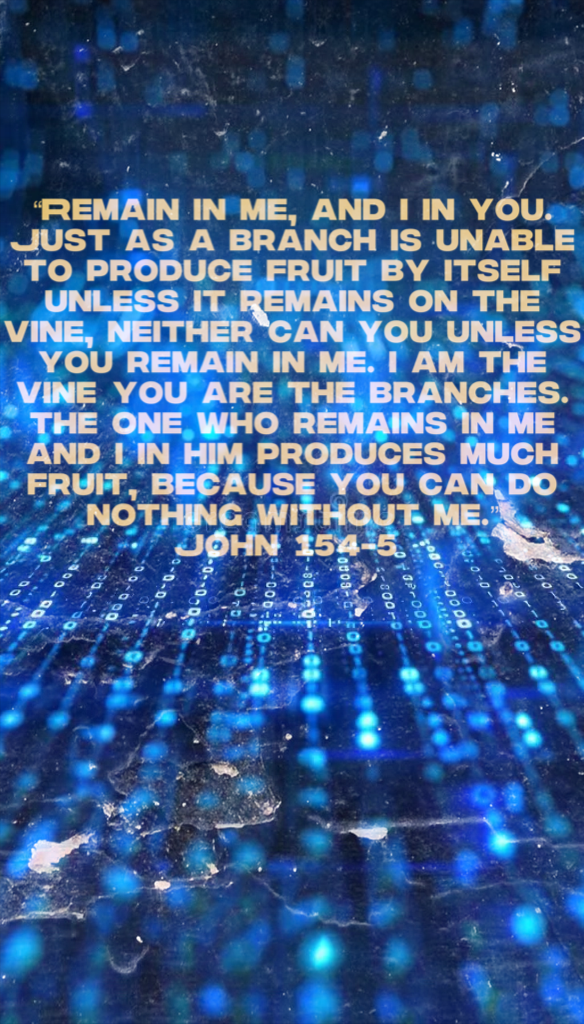
“Every branch in me that does not produce fruit he removes, and he prunes every branch that produces fruit so that it will produce more fruit. You are already clean because of the word I have spoken to you. Remain in me, and I in you. Just as a branch is unable to produce fruit by itself unless it remains on the vine, neither can you unless you remain in me. I am the vine; you are the branches. The one who remains in me and I in him produces much fruit, because you can do nothing without me.” – John 15:2-5
𝔒 𝔗𝔥𝔢𝔬𝔰 𝔱𝔬 𝔗𝔥𝔢𝔩𝔢𝔦. 𝕹𝖔 𝖌𝖚𝖎𝖑𝖙 𝖎𝖓 𝖑𝖎𝖋𝖊, 𝖓𝖔 𝖋𝖊𝖆𝖗 𝖔𝖋 𝖉𝖊𝖆𝖙𝖍, 𝖙𝖍𝖎𝖘 𝖎𝖘 𝖙𝖍𝖊 𝖕𝖔𝖜𝖊𝖗 𝖔𝖋 𝕮𝖍𝖗𝖎𝖘𝖙 𝖎𝖓 𝖒𝖊 𝖋𝖗𝖔𝖒 𝖑𝖎𝖋𝖊’𝖘 𝖋𝖎𝖗𝖘𝖙 𝖈𝖗𝖞 𝖙𝖔 𝖋𝖎𝖓𝖆𝖑 𝖇𝖗𝖊𝖆𝖙𝖍. 𝕵𝖊𝖘𝖚𝖘 𝖈𝖔𝖒𝖒𝖆𝖓𝖉𝖘 𝖒𝖞 𝖉𝖊𝖘𝖙𝖎𝖓𝖞!!!!
𝕭𝕰𝕹 𝕬𝕹𝕿𝕳𝕺𝕹𝖄 𝕾𝕴𝕸𝕺𝕹
Writing as 𝖂𝕴𝕷𝕷 𝕱𝕺𝕽𝕲𝕰
𝕻𝕴𝕷𝕲𝕽𝕴𝕄 𝕻𝕺𝕹𝕯𝕰𝕽𝕴𝕹𝕲𝕾 𝕸𝕴𝕹𝕴𝕾𝕿𝕽𝖄
 Pilgrims Ponder